Books are a forest and it’s hard to see the trees, except the tall ones or the old ones. But when you enter the forest, it’s the new growth that emits the sunlight....

Thursday, July 5, 2012

How came my short story collection title - and a review of Mount Can't


When I arrived at the title of the first short story in my collection Curiosity Killed the Sphinx and Other Stories, I meant for the sphinx to be like that at Delphi, a sphinx with riddles.  The first story is about the hierarchy of computer saavy.

The computer was a riddle in the1980s.  While finishing coursework for a graduate degree, I worked in university departments and must have tried the programs of about six manufacturers in one year.  Computers then were not standardized and often, employees in a department were struggling with manuals that to most, were in hieroglyphics.  I can still remember these manuals being handed around and then a group standing around the computer, attempting to interpret.  “Just press Escape” was often a solution, the Escape key having generic magic.

In my advanced creative writing program, I was the only one who wrote some of my work on a computer.  When asked about it, I said that my writing seemed less finished than on a typewriter. I could backtrack, delete, paste, and get myself confused with a new program.  Yet I knew writing with a computer had many advantages. 

The new language and icons reminded me of ancient Egypt although I hadn’t thought about that subject much since grade school.  I’d thought more about religion and one year, I gave up, feeling like the furrowed-foreheaded, trying to comprehend astronomy.  I said to myself, “The human brain isn’t made to comprehend God.  My cat pulls a book from my bookcase, copying me, but a human attempting to understand God might be like a cat trying to read a book.”

At the used antique and bookstore where I worked, The Cult of the Cat by Patricia Dale-Green came across the desk.  Looking through it, I found a papyrus picture of a cat reading hieroglyphics.  On closer examination, I saw that the cat was staring at a snake symbol.  Yet I thought this so funny that I photographed the picture and put it on my eBay used book site.  I didn’t know much about image use but one day, I googled the image.  Finding that I was using a Bodleian Library image in my eBay banner, I wrote to them, saying I was willing to pay the use of it for a few months and that I had removed it.  The permissions person wrote back and said they would like to try lending the electronic image for a year on eBay. They liked my bookstore there and gave me a deal.
So I got used to my Egyptian cat and then I began to read up on Egyptology.  I found it entertaining, like “The Flintstones” when I was a kid.  Egyptologists differed in their interpretations of that three-thousand year nation.  One source said they rubbed noses instead of kissing until the Greek period.  Their children’s illustration of the war between the cats and the dogs looked like Seuss.   Finally I read Herodotus, the only historian who answered the question I couldn’t fathom  - how those great pyramids could be built, using the labor they did.  In 2500 B.C. it would seem easy to flee such a civilization, especially if a person could build a boat.  The ridiculous project of 100,000 people laboring for one, according to Herodotus, somehow happened during the reign of wicked pharaohs.  He obtained this information talking to Egyptians in 500 B. C.  He didn’t say how these pharaohs could force labor but I think it may have been from either promises or fear.  He wrote of a machine they used in moving blocks up the step pyramids.  I’d thought the ancient people might have been impressed with technology and prosperity, that they flocked to Egypt the way people flocked to New York City.  Not so.  Those great pyramid pharaohs had oppressive power, perhaps from having more people on their side than on the laborer’s side.  Apparently, that’s why the pyramids were never built so high again.  Aristocrats leveled the pharaoh’s power by the tenth dynasty.

I made up my book title before I studied any of that.  So I wondered again about the title but liked it still.  The issues with the computer and the internet are really staggering.  I was very impressed at how the computer industry shared so much technology and made it affordable when they could have been elitist.  In the early 1980s, people thought the computer was being managed by dorks who were leading us into robotic life.  Surprisingly, the internet gave us identity after cities made us feel anonymous.

The stories in CuriosityKilled the Sphinx and Other Stories are usually modern dilemmas in which answers could be pessimistic or otherwise.  If we can imagine how to survive them.


~~~~~~~~~~~


My review this blog is of  Mount Can't by Anne Arlington, for those who like eccentric characters and historical parade.  I agreed with the first reviewer - "Unlike anything I have ever read" - very original!

Eccentric characters clash with government after the threat of a volcano disrupts a quiet village that attracts tourists for the historical interpretation done there. As the history employees try to preserve the integrity of their jobs and to suppress the rumors, they each belie their contemporary interiors. The doctor, the park manager, the funeral home director, despite their proclivities with eighteenth century hobbies, emerge in their desperation as men intent on outwitting the intrusion of the state. Enter Farrell, a woman hired to publicize. Her past relationship with Effen, a harpsichord player, brings on the sort of news that we read today.

The author is brilliant in portraying the odd turnarounds of these characters and she develops their quirks in the mounting tension. The present tense used throughout emphasizes their grasping of a quiet life, built on the colonial past of the village. This book is different, original, and all the while, the action is influenced by the world we know, causing a kind of madness to pervade. It has pathos, is funny, and it typifies our modern age.




Sunday, June 3, 2012

My short story collection released! - Curiosity Killed the Sphinx and Other Stories

Curiosity Killed the Sphinx
and Other Stories
Released from Press Americana is my short story collection, Curiosity Killed the Sphinx and Other Stories !!  The book is available at Barnes & Noble and Amazon.com besides being distributed by Ingram’s.  Later this summer, the Kindle version will also be available.  At Barnes & Noble, the paperback is currently $7.97, almost half price.

Here is the back cover text about the book: 
“Winner of Prize Americana, Curiosity Killed the Sphinx and Other Stories is a collection of short fiction exploring the complexities of life.  Laying the profound beside the mundane, author Katherine L. Holmes creates rich and complicated characters who search for identity, meaning, and purpose within a world often dangerous and sometimes even cruel.  Her readers relate to such struggles and find comfort as they face similar challenges of the own.”

A couple crashing with early computers, a divorced woman finding her scattered family strangers, a girl running away to the shop where her parents’s antiques were sold, Midwestern college students in weather and water emergencies  - these are some of the conflicts examined.  Past solutions tempt as characters consider contemporary choices.

My tags at Amazon.com are:  antique stores in fiction, computers in fiction, contemporary issues in fiction, domestic violence, drug abuse in fiction, midwest fiction, midwest short fiction, minnesota authors, parent issues, relationships, short stories, short story collections, women s issues.   You can add or reinforce tags when you look up a book at Amazon.

Of course, I want to encourage people to read my short stories.  But I also want to encourage people to read more short stories.   In my used book work, vintage magazines are a favorite to list.  America developed the short story for magazines, many containing three or more short stories in their issues from 1885 to 1930.  The great short story was terse and had a twist at the end.  When I listed and read vintage magazines, I saw people sitting around a hearth, reading short stories on their own or aloud in the way we watch television.  The detective, the romance, and then the literary short story were the fare of thousands.  

Could never forget Thurber's "Catbird  Seat."
The short stories of  F. Scott Fitzgerald, Katherine Anne Porter, D. H. Lawrence, Muriel Sparks, Margaret Atwood, and Alice Adams were, for me, as great in collection as their novels.  Then there were the authors who concentrated on the short story -  James Thurber, Katherine Mansfield, Frank Ellison, Ann Beattie, Joyce Carol Oates, Alice Munro.  Short stories tend to focus more on character than on plot.  But that’s why the story twists and fascinates when the author has captured a character in a situation. 


Today, the public can watch short television dramas or sit-coms without wishing they were movies.  We live in a time when people are busy, traveling from here to there or to work everyday.  Granted, the novel has its movie mesmerization when it’s good.   But reading short story collections, I couldn’t understand why the public didn’t like them as short fiction fare, something they could finish between planes or over a lunch hour.

The internet journal might revive the magazine short story.  I watched them disappear when photographs took over magazines such as Look and Life; a few magazines such as Redbook continued to feature short stories.  In the old magazines, short stories were usually accompanied by illustration.  Internet publishing can accommodate that and attract readers.  I had some published after cruising the journals at New Pages.com.  If the magazine comes back that way, I hope the collected short story book can promise reading satisfaction more than it has.

I’ve lived in Minnesota all my life - in the southern agricultural region, in both St. Paul and Minneapolis, and in Duluth, the region where my grandparents lived.  I meant for my short stories to be regional, portraying contemporary life in the Midwest.  That was because life in the Midwest was changing and still is.

Tuesday, May 1, 2012

My middle grade loon book to be published!

On April 16, I signed a contract with Silver Knight Publishing for my middle grade book The Wide Awake Loons.

That book felt “meant to be” from the first.  The conception of books is a subject that mystifies.  The Wide Awake Loons is the only book that I planned in my head before writing it down.  My other novels usually began as a short piece or story that developed as I wrote.

An unusual  shot by Steve Cushman
Loons became a symbol of writing for me.  Does a writer travel from here to there or does a writer dive into their material, submerging ideas and experiences before surfacing like a loon?  I never wrote a first draft so quickly again.  And strangely, I hadn’t really learned how to plan a book in my head.  It may have been the hours at work one summer in Minneapolis and the muggy weather that had me planning a book I put off writing. 

Or the reason was better stated by these authors:

"In writing, there is first a creating stage--a time you look for ideas, you explore, you cast around for what you want to say. Like the first phase of building, this creating stage is full of possibilities.”  - Ralph Waldo Emerson

“Most of the basic material a writer works with is acquired before the age of fifteen.”Willa Cather


“To write fiction, one needs a whole series of inspirations about people in an actual environment, and then a whole lot of work on the basis of those inspirations.” -  Aldous Huxley


"Because I don’t work with an outline, writing a story is like crossing a stream, now I’m on this rock, now I’m on this rock, now I’m on this rock."  - Ann Beattie  (from the Paris Review, 2011)


Whether I begin a novel in my head or on paper, I usually write as if I’m on a journey with a map rather than an outline.  Events are starred places, however I’m not sure about how I will get there and what is on the way.  That sultry summer when I planned my loon book, I spent some days in Northern Minnesota where I’d vacationed since childhood and where I always heard loons.  Loons are enigmatic, sitting on the water like ducks, but if you see one and approach it, the loon will tease, diving under and making you guess where it will emerge on the lake. 


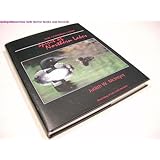
The Common Loon by Judith W. McIntyre
I read up on loons and while reading nonfiction, the book took form.  At that time in Minneapolis, I lived one block from a branch YMCA.   While writing my loon book, I swam once or twice a day and sat in a sauna with an after-work group.  Since, I’ve known that if I feel writer’s block, I should swim.   

As a child, I was so enamored with Dr. Dolittle that after reading a chapter, I rewrote it in my head with me as Dr. Dolittle’s daughter, talking to animals and traveling with him.  It was probably my first experience, writing in my head.  Animals communicate; you just have to introduce a kitten to a cat and soon, the cat will tell it where it can sleep and when it can eat, and that it should groom itself before approaching.  Birds intrigue, succeeding at navigation and establishing nest sites that are recovered from one year to the next.  Having read many animal and anthropomorphic novels, I’ve long been fascinated with animal communication and also with telepathy.  The Wide Awake Loons portrays two worlds, that of humans as we know it and that of animals communicating between themselves. 

I’ve already set up my fan page for the book, anticipating the cover, and plan to chronicle the publishing of this middle grade loon book.  Here is the Facebook page address:   https://www.facebook.com/WideAwakeLoons


~~~~~~~~~~~~~~~~

Monday, April 2, 2012

The Jungle, desk hazards, and reviews: Tom Winton and L. Anne Carrington

It was about time I read The Jungle.  Having grown up in a town where meat was slaughtered and having some knowledge about the history of Chicago, I put this book off.  As a vegetarian most days, I thought the historical expose would be a multiple whammy.  Then I came across a used copy and opened the first page.

What I wasn’t expecting was the fine writing, remindful of a Russian novel. Though much of The Jungle is gritty, even infernal, the fabulous style and portrayal of the characters makes it very readable, as Dostoyevsky is.

Upton Sinclair delved into every turn of a man who, at first, would rather have worked than pursued an education or even information about the United States. His capacity for experience, the gruesome jobs he has in Packingtown, his roaming as a hobo, and his attempts to survive in the mob, give a formidable background to the final political tone of the book.


~~


Compared to the work risks in The Jungle, desk work doesn’t seem to have hazards.  Yet as I finished The Jungle,  I felt as if my computer mouse had given me “the arm electric.”   My new cat Curdie tossed the mouse to the floor a few times.  But checking around, I found that my “arm electric” exactly fit the symptoms of carpel tunnel syndrome. 

I’d known people who had surgery for carpel tunnel; that’s indicated for 50 percent of its sufferers.  I recalled that the condition had to do with tendons but didn’t realize that the electric sensations were from a tendon pressuring a nerve. A few days with support under my wrist convinced me that my problem could be improved.  After buying a wrist splint at the drugstore and wearing it at night for two weeks, that electric feeling has become more and more infrequent.

I wondered if many writers were suckers like Jurgis in The Jungle, having become addicted to a dream, writing fiction during an unemployed year. 
While working at a used book and antiques store, I began collecting inkwells.  If my writing hobby had turned into a kind of boomerang with editors, all that desk work was nothing to what writers did with an inkwell and pen. 

I’d developed osteoarthritis, both in my toes from my habit of walking miles, and in my finger joints.  I don’t know when mentholated preparations like Ben-Gay were developed but I could obtain weeks of relief from one application.  I bought a jar for about $5 four years ago and I still have half the jar.  The doctor told me to just keep walking and typing.  I guess the bones grind where the joint cushion is worn, creating space and eventually relieving the pain.

Why do writers become so obsessive that they will put up with painstaking secretarial work?  Tom Winton in Beyond Nostalgia shows how life experience lead his protagonist to write. 

High school romance, at the outset of Beyond Nostalgia, is well-orchestrated and exciting. While Dean and Theresa are relieved to have found each other, discoveries about their mothers' sad psychologies hinge their relationship. Winton has a flair for setting and detail in every scene. The New York City romance, the Copacabana after prom, the chukka boots, stir the senses and nostalgia for the era. Dean Cassidy's attachment to Theresa, even after their break-up, develops into a believable obsession about first love.

This alternates with his disillusionment about being drafted and about his regular work after he marries a woman who exemplifies selfless love for him. Dean's skepticism about the working man's role in America, what leads to his writing, results in a brilliantly elaborated conflict between his married life and the Eden of his first love experience.


~~

Many women feel that life experience has left them injured by the time they are fifty – if they are too nostalgic about their pleasures and their health before that.  L. Anne Carrington has written a delightful book for those who don’t like to look ahead, entitled Fifty.

What is at once satisfying about Fifty is the voice of Randi, the fictional adviser. Sometimes it's caustic, often it comprehends the media and the trends of our time, mostly it is inspiriting. Randi causes a post-fifty woman to re-evaluate her life and its opportunities. Yet she is prepared for our replies, the sort of thing that's said under the breath. You feel that you're not alone in having sentiments that sometimes can't be said aloud.

The book covers single women, working women, bodily conditions and grooming, children, finances,  and of course, men. I especially liked her chapter about the treatment of women by other women, on the job or socially. That subject isn't often handled although during our fifty years or so, women came out of the home and interacted with the world and each other.


I felt ready for anything after reading Fifty and enjoyed Randi's night out celebration.


~~~~~~~~~~~~~~~~~~


Monday, March 5, 2012

Living Wills, my mother, and m. m. Fahren's The Golden Amulet

In writing, in thoughts, a person is a living will of their own choices.  My mother’s death was complicated because of issues about her choices.  I remember four years ago when she was 88, she had a stressful meeting with doctors and other health workers.  My sister was present.  My mother informed me afterwards that she wasn’t going to have any more operations.  What went into her health records was an Advanced Directive, stating her decisions then about her future care.

Until my mother was in her mid 80s, she had few days when she wasn’t in good health.  She taught stringed instruments to elementary school children when I was in grade school.  The sounds I used to hear during private lessons!  Music was a constant in our household, and I also had five siblings.  My mother played violin and viola in community orchestras and the Duluth Symphony.
My mother when she was young
After she attended Northwestern University, she married my father.  Though my father wouldn't learn a musical instrument, his father was a professional French horn player, playing with Sousa after the U.S. Army Band, and then for Arthur Pryor and other orchestras.  I nearly went on to study professional flute after lessons with a symphony musician.  Some of my best memories of my mother had to do with music, especially when she accompanied my flute playing on the piano.  Before that, I remember being thrilled at an igloo cake she made for my birthday party!

Though we had difficulties later on, she was always a leader for me.  She liked to read and introduced me to many authors.  Divorced, she read all of William Faulkner which I couldn’t understand though I admired his work in college.  I read D. H. Lawrence and Eugene O’Neill as an adolescent, when she did, and later, looking for something to read, Rebecca West.  I remember her recommending Watership Down, E. L. Doctorow’s Ragtime,  and her handing Life According to Garp to me, saying, “Tell me what you think.”
At the Back of the North Wind


My love of children’s novels began with those in my childhood bookcase.  I didn’t know then that Nancy Drew, Doctor Dolittle, A. A. Milne, and George MacDonald were in hers.  As a child, I thought that those books were written in the 1950s.


My mother at 91
Of course, her thoughts and choices to me were sacrosanct when she showed signs of dementia.  And after a year and a half in assisted living, she suffered a stroke.  I visited her in the nursing home during lunchtime while she refused food, complaining of nausea. She had little movement yet much pain.  That resulted in her being drugged but when a member of the family saw her, a rescue was attempted.  In the hospital, she was given a temporary feeding tube.  A doctor confronted me about these decisions.  I was not legally her decision-maker so I contacted my sister, an occupational therapist who has worked with stroke patients. 

 The Advanced Directive in my mother's records specifically stated that she decided against feeding tubes.  When she was returned to the nursing home, she became agitated and pulled hers out, what many patients do.  

Now my sister and I are strong about filing a Living Will with doctor and lawyer.  States and hospitals have forms for this.  But when a patient has a stack of records, it’s important to stipulate that doctors need to consult the choices a patient made when they were lucid. 

I figured that my mother lived more than 1100 months and only two of them were spent in physical suffering.  But this was a lesson about writing things down, making wishes known so that they could be actualized legally.

Recommended!


The Golden Amulet
M. m. Fahren alluded on Facebook to our time and the elderly, what seemed clairvoyant.  I found her book The Golden Amulet :  a tale of the faerie to be an absorbing and lush reading when my mother’s condition worsened.  I’m sure my mother would have liked reading this book to us when we were young.

Written in classic fairytale style, The Golden Amulet weaves the theme of veiled identity. It's an exciting tale, starting with the mystery of a princess' near death and a traveling minstrel's spectral healing.

The dragon scenes lurch like fire before the investigation of the knight who killed it. A father-daughter relationship has the psychology that makes fairytale rich.

I enjoyed the strong and telling prose in this tale, so resonating and yet strumming a time that the young today can enjoy.


~~~~~~~~~ 


The House in Windward Leaves, my middle grade fantasy about identity, will be featured at DailyCheapReads junior edition on March 8, 2012.  


Thursday, February 2, 2012

Resolution Again: Revise

My New Year’s resolution is the same as last year’s, until June at least.  2011 was my first year writing in which I spent most of my time revising!

After I revised my Authonomy Editor’s Desk book, The Swan Bonnet, I kept going with my old stuff.   I had loved the new idea and if I got the message, “Not right for us but send again”, that had me going on to my next idea.  I enjoyed making a creative mess but I wasn’t so avid about cleaning up.

One recent year I went dry.  I thought that sad but while reading A Writer’s Diary by Virginia Woolf, I knew I hadn’t gone the length.  Virginia had to keep revising for publication and she suffered.


“This is in fact the last day of 1932, but I am so tired of polishing off Flush – such a pressure in the brain is caused by doing ten pages daily…”


Back to my last blog subject about writing and sanity, I had pondered the sanity of Virginia Woolf’s work.  I’d suspected that life issues caused some of her infamous madness.  And found that her suicide was related to the threat of Nazi invasion.  Leonard Woolf in his memoir, The Journey Not the Arrival Matters, wrote of a suicide plan that he discussed with Virginia and other Jews in England.  Virginia died when the Nazis were winning and invasion seemed imminent.

She revised to migraine level.
  
“I am now galloping over Mrs. Dalloway, retyping it entirely from the start, which is more or less what I did with the V.O.  [The Voyage Out]:  a good method, I believe, as thus one works with a wet brush over the whole, and joins parts separately composed and gone dry.”

Hey, that’s what I did when I revised.  Put the whole thing through the typewriter or word processor again.

I had so much thrilled at my imaginative discoveries that I went from one project to the next like a thrall.  But along the way, I’d also discovered that the more I enjoyed myself, I didn’t like reading what I wrote.

“What is written without effort is in general read without pleasure.” (Samuel Johnson)

What we read of Willa Cather is one-third of what she first wrote.  My old manuscripts were like crude sculpture, needing refinement.  The more I lopped words, the more the story came out of the blob.  When I drafted a story, I put in everything I could think of, the kitchen sink, so that if one thing worked and another didn’t, that could go.   I'll probably cut 25,000 words out of my adult novel by the end of my current rewrite.

I suppose I gave up rather than working.  If digital publishing hadn’t happened in my lifetime, it’s doubtful that I would have done the work that might make my projects readable.  I received letters from top editors at major houses but I didn’t get what I wanted - a long letter discussing revision like the Authonomy reviews.  I received short or brief letters.  And I thought my next project was going to be the greatest.

As with most longterm work, revising and editing my own manuscripts began to feel like a skill.  I regretted that I hadn’t learned it earlier.  I’d had my experience amongst writers in Minneapolis and after that, I wrote in a vacuum, not realizing that writers are like other working people.  They probably won’t do so well alone.

“Being a writer is like having homework every night for the rest of your life.”  (Lawrence Kasdan)

At first the revising was like bicycling a mountain path but the ride down was so nice that I revised another book even if it made me look at my past mistakes.


During this, I read Nancy Brook's Cycling, Wine and Men:  A Midlife Tour de France.  In this memoir, the author literally bicycles mountains while musing on the challenges of life after 40.  Here is my review:

Nancy Brook has chronicled both the challenges of middle age relationship and that of athletic endurance in this delightful book. It is a ride to take, the strenuous mileage of her cycling while she works out personal dilemmas and proves that she can pass her own test - riding up mountains in France. This is a tour of France with the underpinning of purpose.


While I could imagine this exciting trek like a viewer of athletes on television, she has provided tidbits on the French villages, history, and the ambiance of her tour friends. Like the destinations on her map, she has interwoven her own concerns, the doctor Dante, the cat Oreo missing at home, and the epiphanies that she reaches in the way that she cycles to a mountaintop near the end. This is a book that celebrates womanly endurance while facing whatever surrounds.  It has the travel writer's description and the flow of story, two-fold and inspiring.


Tuesday, January 3, 2012

Fiction, Sanity, and a review of Jeff Blackmer's Draegnstoen

The House of Windward Leaves is free on Smashwords until January 26 with coupon PB55U

 
Dealing with the possibility of death at Christmastime, I was drawn into
reading one of the vintage books I was listing on eBay, The Enchanted Hat by Harold MacGrath.  At once, the 1900 book reminded me of P.G. Wodehouse.  A lost book, each of its long short stories centered around a piece of clothing.  While I had to think about old age, I read at bedtime a book that entertained a century ago and because I needed something lighthearted.   

I also read Draegnstoen by Jeff Blackmer.  So satisfying and hitting the spot for another reason.  Its well-drawn characters and historical conflicts put my anxieties into perspective.  Here’s my Amazon review:


Draegnstoen settles at once into the bones. After so much Arthurian tragedy, this book glimmers of a triumphant end, that of the Britain tribes ousting the Romans. I was entranced with the royalty that led to Coel, Old King Cole in British legend, his brother's marriage to his sister and the dragon hunts, depicted so that I wondered if dragons might have become an extinct species in Britain.

The momentum along with the details made me confident of the author's research into the fifth century A.D. And the intermarriage with the Pict tribes from Scotland was charming, in dialogue and in the uncertainty of the alliance. The Pict princess entered battle tattooed and she had a crow at command.


This whole book is elegantly constructed with intrigue and the spying that finally gathers the tribes to Coel. They fight the Romans, one thane revenging a crucifixion, and as the Goths dominate Rome. But it is the focus on individuals that keeps one reading. In the end, I felt a chill in my spine because I believed this book had comprehended early Britain and a war it had won.
 

And I was reading Alice Munro’s Hateship, Friendship,Courtship, Loveship, Marriage, short stories that present real scenario, character-oriented so that a person can think through dilemmas.  There are middle-aged characters and older in this collection, usually spoked with the younger generation.

On writing sites, I sometimes read forum comments from authors who feel unstable if they don’t write.  Hannah Warren, the author of the upcoming Casablanca, My Heart, recently said that she felt restless if she didn’t write.  I responded to that on Facebook, saying that she might have creative energy the way an athlete has muscular energy and that energy needs channeling. 
 

I wondered about this some years ago when I found that writing stabilized my days.  Legends about authors are often about their journey to instability.  How many, from the inside, took a journey to mental sanity?  Writing is to make sense of reality, and also of undercurrent emotions and thoughts. 

The year I wrote The House in Windward Leaves was one of the worst in my life, I thought at the time.  With men problems and my hometown blowing up into strike news, I really thought the adult world was nuts.  Reading fantasies on the internet now, I sometimes wonder if the author was “going through things.”

Writing became a habit but I didn’t feel it gave me constant sanity; it often gave me upsets.  Only for about an hour after writing, but I might feel disoriented when I was getting ready for work.  I even felt that I was experiencing method writing like a method actor.  Incidents in the day felt like coincidences, causing me to adjust my story.

Working with used books and listing them for the internet, my librarian work, is a sane task.  Recently, my 92-year-old mother has continued her decline in suffering a stroke.  She had come to love her assisted living community and liked her apartment, decorated with familiar living room pieces and photographs.  Then she had to enter a nursing home.  The sadness with my five siblings drove me to my librarian work.  But during the last weeks, I’ve found sanity in writing again.  I could lose myself in the adult book that I’m revising.

When this happens, I’ve thought that writing is like reading, only enhanced.  You open up the pages and if you get lost in them, forgetting your worries, then you think that you might be onto something.  During difficult times, many people look for a book that can totally involve them.  In Minneapolis many years ago, I interviewed at Odegaard Bookstore with the owner, Dan Odegaard.  He had a very fine bookstore and he told me that he felt like a doctor, helping customers to find the book they needed.

The art of fiction might spring from a need people have when troubled, that of sharing bad stuff.  Friends do that.  Group therapy is based on people sharing experiences and anxieties. Writers with problems have been attracting readers since the novel was first published.  Perhaps that’s because people don’t like to confront problems and that the novelist, confronting events, issues, and their effects, takes the reader in hand.  Maybe it’s brave to confront that way, like an explorer or a hero going into dangerous territory, risking panic or hysteria or injury.