Books are a forest and it’s hard to see the trees, except the tall ones or the old ones. But when you enter the forest, it’s the new growth that emits the sunlight....

Monday, December 27, 2021

Poetry collection published: After Much Has Died Down


My first collection of poetry, After Much Has Died Down: Collected Poems in Three Parts, is published. The volume contains poems that were in literary magazines, both print and on the internet, from the 1990's until this last year.

The title poem in this volume sets the foreground and timeframe of the other poems - a between time of adult adjustment. The backdrops are often previous events or relationships. Most of these poems attempt an immediate realization through imagery and without back pedaling. Besides the poet experiences, poems include situations of others as a kind of kinship - friends, fellow employees, neighbors, people at eating places, a composer, and even a raccoon. The poems take on the journey to tomorrow.

All but six of the forty-six poems have appeared in journals, as credited at the front.

Some of the poems have minor revisions from their original publication. It was a nostalgic and enjoyable project, preparing the book for publication. For me, these poems were a colorful diary, remindful of experiences, their interior atmospheres, and the doings of particular months.

The majority of the poems were written in Northern Minnesota, after a move. I had lived in the Twin Cities area for twelve years. Being near nature again stunned me at times and inspired poetry that symbolized change, development, growth, and awareness. I had concentrated on fiction before then.

These are some of the journals that I was so glad to be published in: ArLiJo, Avatar, Cider Press Review, Ginosko, Hamilton Stone Review, I-70, Minnesota Poetry Calendar, The Reader Weekly, Shadowtrain, The South Dakota Review, Stirring, and The Straddler.

The paperback and Kindle of After Much Has Died Down: Collected Poetry in Three Parts are available at Amazon and other outlets.

Wednesday, November 25, 2020

Off the Bourgeois Track and Other Stories About Women Gone to Work


My second short story collection is now released! Off the Bourgeois Track and Other Stories About Women Gone to Work contains twelve stories and two short shorts. Six of the stories were previously published in magazines or journals. This collection is available in both paperback and ebook. Here is the summary:

In this collection, happenstance brings out women characters and how they juggle jobs, living issues, and men. The fourteen short stories aren't so much about fortune as about the unprecedented and sometimes humorous hours during which a woman must act on her own. The women are in the adventure of a transitional time. Characters include college graduates in entry level jobs, a student of Scandinavian languages, a puppeteer in a temporary job, a clothing salesclerk, a professor in summer seclusion, and a piccolo player.


Most of these stories take place in the Midwest. In the writing, development often approached a final dilemma, allowing the reader to think on it. I've like an open end. Here are a few short excerpts about characters or their perplexed moments in stories following the samples at Amazon and other sites.

In "Fondue", a college student escapes to resort work where the chef is ferocious.

After two platters collided outside the swinging doors and a pair of lederhosen appeared to be clawed with Spanish salsa, the hostess called me into the office. Contact with Clement had to be established again.

I'm not sure how it happened, business being a sort of beast to me then, but one day I was stating Clement's complaint as unsparingly as a doctor - that the resort was "as always wrong as the American customer, making mockery and money." The next day I was their sacrifice, fawn footing it through the forest for chocolate torte at Clement's chalet.

 From "Assumptions:  A Silent Story."

Mona thought she was converting one of the last accounts of a woman’s physical injury into a paragraph without sentence complications when Norman, instead of calling her before lunch, called her supervisor. She hurries through the passageways of the legal research agency, a cavern to her. Today she is also dodging Norman’s clashes in court, fuzzy fragments of light that are supposed to expose villain, victim, hero. The old-fashioned radiators shimmer and the elevator lights blink as Mona wonders about the assumptions in courtrooms.

Three women share a duplex during their first city jobs in "Something Missing."

 Did you pick someone up?" Rena questioned, seriously leery now. 

Paulette explained about the bus and the St. Anthony Park directions. Usually she was the one who listened. Rena had a biography of boyfriends from Milwaukee and Chicago where she attended her first two years of college.

"You’re going out with him?” Pony was incredulous. She was from a town that was short on introduction because everybody knew everybody.

 I thought he could come over here,” Paulette said. “Especially if he rents that house. He probably comes from a well-off family in Costa Rica.”

A college professor alone at her lake cabin in "The Recluse and the Raccoon":

While this last year, they were probably speculating about her. Her marriage was not so solid a statement as it had been. A miasma seemed to have seeped into class, a mood that wasn’t altogether hers. It was the problem of being unlovable, a fear that haunted students. Even her son was not reliably faithful anymore, not in the way her tomcat and her Welsh terrier were.

Away from their men, two sisters-in-law commiserate about  their plans in "Star-crossed."


During marital counseling, Sylvie took the Minnesota Multiphasic Personality Test. She had gone beyond the normal range on the masculine-feminine scale. Of course she liked flowers. She had worked at a university extension office and then at a nursery, she had protested. The counselor had interpreted, “She will usually keep up a good front.” And then he explained to Kirby that his wife could be confusing because of indirect communication.

A piccolo player's attitude in "The Audition":


Vivian wanted to elevate the piccolo from its origins in the drum corps. She had tried to soften its timbre while avoiding the covert rivalry of female flute players. Sometimes, she could swear that if flutes were rifles and piccolos pistols, she would have been murdered by now. Vivian didn’t believe that an enthralling tone could be maintained by a heartless competitor.


My first book of short stories, Curiosity Killed the Sphinx and Other Stories, won the Prize Americana and was published in 2012 by Hollywood Books International.


Monday, September 14, 2020

Josiah's Apple Orchard is now an audiobook


Promo codes for The Swan Bonnet are still available, both US and UK. Message at The Swan Bonnet Facebook page. 


During the lockdown period, I've released another audiobook, Josiah's Apple Orchard, narrated by Lyndsay Paulina. I enjoyed working on this middle grade book again while it was a bit comforting during the lockdown. The apple-picking in the book is at the orchard of an old man who is isolated and under a stress that his visitors don't realize. The book is loosely based on childhood experiences. It also covers a year of national shock, John F. Kennedy's assassination. From the perspectives of young people, the book made a parallel with 2020. There is also the fascination and relief of music for the main character, Vivvy.  Josiah's Apple Orchard is available at Audible, Amazon, and iTunes.


Lyndsay Paulina, the narrator, captures the middle grade atmosphere. In the book, Vivvy and Matt would like some adventure. Her reading has the humor and vitality that children will identify with, yet it adjusts for the mood levels that develop. Lyndsay has narration, stage, and musical acting experience besides stage work with puppetry. She lives in New York City where she is also a licensed tour guide. Her website is: lyndsaycrescenti.com

Here is the synopsis for Josiah's Apple Orchard:

Besides music, Vivvy loves green apples. She and her brother Matt go on morning apple raids until, one fall, their father drives them to a pick-your-own orchard. There, the cross old Josiah inhabits another time where pixies might appear like uprooted saplings. During the early, eventful 1960s, Vivvy takes the flute from Mr. Fortray, a band teacher who plays jazz. Another apple picking trip is confused with detours and Josiah is angry about progress. Vivvy finds that if she wants to do what she loves, she must think beyond a fear that her father and Josiah share.

"The story takes young readers on a journey...The surreal feel of the book is captivating and enthralling. A very original and refreshing plot that will make readers think." - Readers' Favorite five-star review.

The weekend setting in this book typifies the organic farm or the vanishing small farm, what were both so common in the 1960's. It is an introduction to a specialty farm and the grower's commitment and struggle in keeping such a farm afloat.

Until this year, I've bought apples at a local Farmer's Market where, in recent years, I've vacillated between Zestar, Pink Lady, Haralson, and Honeycrisp – all delicious. As still are the Jonathans and Mcintoshes.

US and UK promo codes for Josiah's Apple Orchard are available to reviewers! Message at the Josiah's Apple Orchard Facebook page.


Thursday, July 9, 2020

The Swan Bonnet is an audiobook

The Swan Bonnet is now available as an audiobook! It is narrated by Pamela Hershey who specializes in Young Adult, Children's and Mystery books.


I was very glad to hear Pamela's audition at ACX.com. The Swan Bonnet entails dialogue from its fourteen year old protagonist, Dawn, other teenagers in a small Alaskan town, and adults from different backgrounds. While the narrative voice stood out with consistency and worked for the region, the dialogue parts rebound well and make for easy listening.

She says of this project, “The Swan Bonnet was a great book to narrate. The main character, Dawn was a very strong young girl and her experiences were things that any young woman could relate to today. It was fascinating to learn about those early days of Alaska and the people who lived there then. The language used throughout the book made the narration enjoyable as I love language and metaphors.”

Pamela studied acting and Readers' Theater in college and works fulltime now as an audiobook narrator. She can be found on Facebook at Pamela Hershey Voice Over or at her website www.voiceoverbypamelahershey.com . When she's not narrating, she can be found either with her dog or her horse or fighting weeds in her garden.

The Swan Bonnet was the manuscript I chose to present at Authonomy.com, the HarperCollins site where book writers read the work of others and could contribute comments or critiques. I wondered how I had fared with my historical subject. The first ten chapters went to the Editor's Desk where the manuscript received a review from a HarperCollins editor. While I benefited from suggestions for revision, these are the encouraging comments from the HarperCollins editor:

What a relaxing, classic, and vibrant story. I loved reading about the swans and their histories, and seeing how the family interacted with each other …. I really like where the story is going and I love the setting – Alaska feels vibrant and alive in your storytelling hands.”

TheSwan Bonnet became my second audiobook because of its adventure and its outdoor, endangered bird theme. I thought of it as a contemporary Western where the white hat was worn by a woman.

Here is the synopsis:

Unbeknown to Dawn, her grandfather has shot an old swan out of mercy. In their coastal Alaskan town, her father buys the swan pelt, preventing her Uncle Alex, a fur trader, from selling it for export. Dawn’s father surprises her part-Aleut mother with a hat she helped to make and also with an idea to catch poachers. Shooting swans has become illegal but Alaska is a territory and Prohibition occupies the Sheriff.

Dawn and her mother become involved with suspicious inquiries about the swan bonnet besides its haunting effect. Because Dawn’s grandparents see the swans first, Dawn agrees to secretly watch the migration with the deputy sheriff’s son. But after she and her mother encounter women from a ship and find out about a hunting party, they ride to the inlet. There are townspeople roving the shore too but who is the vigilante and who is the poacher? 


Friday, December 20, 2019

Emerging in Poetry

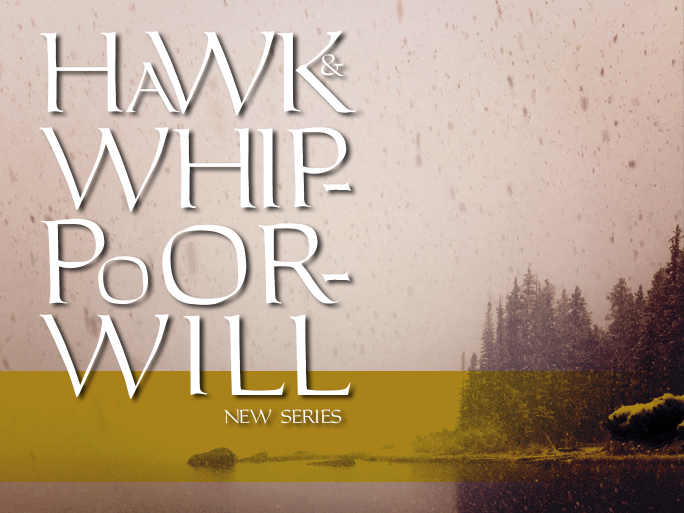
I had a pleasant surprise – the editors and staff of Hawk andWhippoorwill poetry journal have nominated my poem “How a vine staves off eviction” for a Pushcart. The poem was in their Summer 2019 issue. Hawk & Whippoorwill, published in Boston at summer and winter solstices, focuses on the relationships between nature and humankind. 


Many of my poems were written with the idea to reflect human life through the natural world. Besides vacationing in the Northern Woods as a child, I used to go on fishing and apple picking excursions with my father to southern Wisconsin. My dad expressed what many say, that he felt his religion when he was in nature. He also liked the computer and kept up weekly email contact after I got on the internet and had poetry published there. I was surprised, during his last year, when he wrote wondering if I had a new poem for him to read there.

How could religion not be a point to ponder? Having a fascination for the first and last books of the Bible, I concluded in the 1990's that environmentalists were doing God's first mandate. They were taking care of the garden while too many were living outside of it. I tried to write poems as if they might express a theology but of course that failed. Poetry is an art form and, I felt, true when it is concrete and in perspective. 

I wished I'd photographed the yard tree hosting a vine that grew into the form of a man standing on an upper branch.  However that happened, the sight inspired a poem as it might have inspired visual art.


Image by Jolee G @ FreeDigitalPhotos.net

I don't often refer to myself as a poet though I've had many poems published. I liked poetry and early, made a little book called “My Favorite Poems.” My own poem inclusion disappointed. I remember going to my fifth grade teacher in despair because I blocked on a poem. She suggested that I start with a different subject. So I wrote a narrative science fiction poem, finding that her suggestion worked. I was comfortable with stories in prose.

And I was to become more taken up with flute playing so that I had to consider a performance career. Many years later, I opened a drawer of paper documents, bank and such, but also a cache of poetry I sent as application to the University of Minnesota writing program. I'd read much more contemporary poetry and finally re-read what I never submitted for publication. I thought, oh, even though this stuff was inspired by Tess Gallagher, it is something different in rhythm and resonance. It was written by a flute player. I felt I entered poetry after leaving the daily practice of music.

Poetry became a cryptic diary for me. It captured the year, the atmosphere, the ideas in my head, the relationships I had. Sometimes it reminded me of the books I read.  I was always afraid of too much influence from a well-known author. The cure for that, I'd thought, was to read many. Even then, I was influenced by Denise Levertov, Mary Oliver, Louise Bogan, Nancy Willard, W. S. Merwin, and Dylan Thomas, poets that come immediately to mind.

After writing in other creative genres, I felt poetry was the most honest. It's been a lulling late afternoon break for me, poet or person writing poetry.


Tuesday, September 17, 2019

Found I liked less driving in my future


At a bus stop on a Saturday morning:

Do you know if the bus is coming?” A woman sitting in the newly installed shelter, what actually imitated wrought iron decoration.

Let's see, it's 8:31,” I said. “A few minutes.”

I didn't know if it would show up. I usually take the bus on weekdays.”

Oh, it's coming. Maybe on time instead of five minutes late. Less riders on the weekends.”

Well, it's really much simpler.” She showed me her pass like an advertisement. “My car was in for repair and because I need to go across town, it's much easier.”

In a city of 100,000, most people don't rely on buses. But near Lake Superior, above which are steep hills and in the winter, snow and ice, I was surprised that there isn't more bus use.

I ride the bus because of an eyesight issue. My sight problem is not usual; I had an eye muscle operation as a child that isn't done anymore. Like a character in a short story I wrote, I barely passed the driving test, getting 71 twice. In grade school, I dreaded the art teacher but later could do well enough in photography because my eyesight tends towards the two-dimensional. That made it fearsome to drive on many laned highways. In fact I could drive anywhere in Minneapolis and St. Paul without taking a freeway. I don't think eyeglasses helped because of the muscle limitation.

Image by Ben Schonewille @ FreeDigitalPhotos.net

I refrained from repairing an old car before I moved from the metro area. It was really because, with express buses in Minneapolis, I found public transportation more relaxing and a better prelude to a workday. Riding home was good for reflection. Reading on the bus, then using a tablet and next, a smart phone made that time useful.

I was the first of my peers to get involved with a car. In high school, I drove our Volkswagon two hours on Saturdays to Minneapolis for flute lessons, taking 35 W, a flat, straight trip. A week after I graduated from college, I bought a car. 

While at my first job in Minneapolis, I began using public transportation. At 7:00 in the morning, I didn't feel like driving some days. It became the best alternative, I decided a few years later while trawling for a parking place near the University of Minnesota. There were other benefits. In the winter, I didn't have to warm up a car or sit on a freezing car seat. A few minutes waiting at a bus stop seemed less jolting. Especially if the bus was a good route. 

Image by Sicha Pongjivanich @ FreeDigitalPhotos.net

What I finally disliked was the dependence on a car. With less car repair, I noticed the general dependence and the constant issue of parking. Walking was my main exercise so I didn't mind walking to a bus stop. I knew there weren't many people on my sidewalks at the time, so not many who could identify, which made those thoughts fuel for fiction. Two of my short stories in the collection Curiosity Killed the Sphinx dealt with car issues.

Image by Ben Schonewille @ FreeDigitalPhotos.net

I realized that others might, if they stopped driving some of the time, enjoy riding. The setback is that our public transportation isn't often suited to a pleasant trip. If in places like the Midwest, there were more of a demand for public transportation, it might become more comfortable, especially for commuters. This year, a few electric buses have been introduced up here and apart from their being the newest, they are no different for the rider.

After the successful campaign against cigarette smoking, and with the statistic from the Minnesota Pollution Control Agency - 52 percent of outdoor air pollution in Minnesota comes from vehicles such as cars and trucks - a similar campaign could be launched. Yet I believe that if people tried using their cars less, some might prefer the change. Car-pooling is usually less dangerous than driving alone. If many made the switch, it would lessen the climate issue in the atmosphere.

Sunday, June 2, 2019

Influences of the Farm Crisis and Its Recovery


Like many mid-westerners, I visited a farmer relative as a child. The farm was about ten miles from our small city and the relative was Norwegian, not a bachelor. One never forgets the barn, the tree swing with long ropes, the roomy breezy house, and the fields spread around. 
An early 1900's photo of the farmhouse I visited

Our relative and his wife used to visit us in town, and there, they were obviously relaxing on the couch, observing us on their day off. Then, there was joking about farmers coming in, their stalwart, contracted speech, and their clothing styles. Some drove in on tractors, slowing traffic. Yet everyone loved visiting the farm. People drove to outdoor markets and to dairies for eggs and butter because the quality and prices were better.

We went to college, to the city, and heard in the 1980's how the farms were foreclosing. About that time, I learned with sadness that my elderly cousin sold his farm. I'd frequented my first food co-op near the “farm” campus of the University of Minnesota, in St. Paul. After that, I found the closest co-op in other neighborhoods. They were like corner stores when the corner stores were closing. Farmers markets in downtown Minneapolis were festive. But things were changing.

The farming losses had an effect on me. My children's novel, Josiah's Apple Orchard, was revised from a fantasy into a realistic story. (I liked one reviewer saying that it had a “surrealistic feel.”) At the time, I couldn't see the answer to an orchard of specialty apples when in the 1960's, Delicious apples reigned at the supermarket. The foreclosures, though, were fueling an environmental movement that I would be watching. It would have dramatic success.

While I wrote Tug of the Wishbone two decades later, foods free from pesticides and unnatural treatment of animals expanded from farmers' markets and co-ops into the supermarkets. A supermarket began with a corner in the produce section marked “Organic.” The section widened and new organic brands began to fill the aisles. 

 
Image by tawatchai @ FreeDigitalPhotos.net

Mainstream shoppers are now given choice as information reaches them. In the 1990's, the conditions of corporate farms were suppressed. Driving in the countryside, one had to wonder at the animal warehouses appearing while facts about the lack of pasture time leaked out. Humane farming costs more, especially for the farmer, but the demand for it has resulted in a quiet revolution. Mealtimes now retain traditional organic farm foods and are also transformed with new menus. Just as products are advertised in a graded system of their own, the grading of farming methods and animal treatment streams into consumer awareness.

Image by Simon Howden @ FreeDigitalPhotos.net

When some news seems to stultify, this seemingly grassroots movement had swept the nation. Even today with the challenges of flooding and tariffs, it shows how courage and persistence can result in a successful environmental story. Writing in the midst of that inspired my fiction and poetry.

Looking for used books for my eBay store, I know that readers still visit the farm in novels as I did with favorite authors - Thomas Hardy (Far From the Madding Crowd), D. H. Lawrence (The Rainbow), Stella Gibbons (Cold Comfort Farm), Willa Cather's novels, Katherine Anne Porter's short stories about Texas, Jane Smiley's A Thousand Acres, to name a few. Collectible editions of books with farm settings catch my eye and they don't stay long on my used book shelves. It's another warning that farmers and their stories shouldn't be taken for granted.