Books are a forest and it’s hard to see the trees, except the tall ones or the old ones. But when you enter the forest, it’s the new growth that emits the sunlight....

Monday, March 5, 2012

Living Wills, my mother, and m. m. Fahren's The Golden Amulet

In writing, in thoughts, a person is a living will of their own choices.  My mother’s death was complicated because of issues about her choices.  I remember four years ago when she was 88, she had a stressful meeting with doctors and other health workers.  My sister was present.  My mother informed me afterwards that she wasn’t going to have any more operations.  What went into her health records was an Advanced Directive, stating her decisions then about her future care.

Until my mother was in her mid 80s, she had few days when she wasn’t in good health.  She taught stringed instruments to elementary school children when I was in grade school.  The sounds I used to hear during private lessons!  Music was a constant in our household, and I also had five siblings.  My mother played violin and viola in community orchestras and the Duluth Symphony.
My mother when she was young
After she attended Northwestern University, she married my father.  Though my father wouldn't learn a musical instrument, his father was a professional French horn player, playing with Sousa after the U.S. Army Band, and then for Arthur Pryor and other orchestras.  I nearly went on to study professional flute after lessons with a symphony musician.  Some of my best memories of my mother had to do with music, especially when she accompanied my flute playing on the piano.  Before that, I remember being thrilled at an igloo cake she made for my birthday party!

Though we had difficulties later on, she was always a leader for me.  She liked to read and introduced me to many authors.  Divorced, she read all of William Faulkner which I couldn’t understand though I admired his work in college.  I read D. H. Lawrence and Eugene O’Neill as an adolescent, when she did, and later, looking for something to read, Rebecca West.  I remember her recommending Watership Down, E. L. Doctorow’s Ragtime,  and her handing Life According to Garp to me, saying, “Tell me what you think.”
At the Back of the North Wind


My love of children’s novels began with those in my childhood bookcase.  I didn’t know then that Nancy Drew, Doctor Dolittle, A. A. Milne, and George MacDonald were in hers.  As a child, I thought that those books were written in the 1950s.


My mother at 91
Of course, her thoughts and choices to me were sacrosanct when she showed signs of dementia.  And after a year and a half in assisted living, she suffered a stroke.  I visited her in the nursing home during lunchtime while she refused food, complaining of nausea. She had little movement yet much pain.  That resulted in her being drugged but when a member of the family saw her, a rescue was attempted.  In the hospital, she was given a temporary feeding tube.  A doctor confronted me about these decisions.  I was not legally her decision-maker so I contacted my sister, an occupational therapist who has worked with stroke patients. 

 The Advanced Directive in my mother's records specifically stated that she decided against feeding tubes.  When she was returned to the nursing home, she became agitated and pulled hers out, what many patients do.  

Now my sister and I are strong about filing a Living Will with doctor and lawyer.  States and hospitals have forms for this.  But when a patient has a stack of records, it’s important to stipulate that doctors need to consult the choices a patient made when they were lucid. 

I figured that my mother lived more than 1100 months and only two of them were spent in physical suffering.  But this was a lesson about writing things down, making wishes known so that they could be actualized legally.

Recommended!


The Golden Amulet
M. m. Fahren alluded on Facebook to our time and the elderly, what seemed clairvoyant.  I found her book The Golden Amulet :  a tale of the faerie to be an absorbing and lush reading when my mother’s condition worsened.  I’m sure my mother would have liked reading this book to us when we were young.

Written in classic fairytale style, The Golden Amulet weaves the theme of veiled identity. It's an exciting tale, starting with the mystery of a princess' near death and a traveling minstrel's spectral healing.

The dragon scenes lurch like fire before the investigation of the knight who killed it. A father-daughter relationship has the psychology that makes fairytale rich.

I enjoyed the strong and telling prose in this tale, so resonating and yet strumming a time that the young today can enjoy.


~~~~~~~~~ 


The House in Windward Leaves, my middle grade fantasy about identity, will be featured at DailyCheapReads junior edition on March 8, 2012.  


Thursday, February 2, 2012

Resolution Again: Revise

My New Year’s resolution is the same as last year’s, until June at least.  2011 was my first year writing in which I spent most of my time revising!

After I revised my Authonomy Editor’s Desk book, The Swan Bonnet, I kept going with my old stuff.   I had loved the new idea and if I got the message, “Not right for us but send again”, that had me going on to my next idea.  I enjoyed making a creative mess but I wasn’t so avid about cleaning up.

One recent year I went dry.  I thought that sad but while reading A Writer’s Diary by Virginia Woolf, I knew I hadn’t gone the length.  Virginia had to keep revising for publication and she suffered.


“This is in fact the last day of 1932, but I am so tired of polishing off Flush – such a pressure in the brain is caused by doing ten pages daily…”


Back to my last blog subject about writing and sanity, I had pondered the sanity of Virginia Woolf’s work.  I’d suspected that life issues caused some of her infamous madness.  And found that her suicide was related to the threat of Nazi invasion.  Leonard Woolf in his memoir, The Journey Not the Arrival Matters, wrote of a suicide plan that he discussed with Virginia and other Jews in England.  Virginia died when the Nazis were winning and invasion seemed imminent.

She revised to migraine level.
  
“I am now galloping over Mrs. Dalloway, retyping it entirely from the start, which is more or less what I did with the V.O.  [The Voyage Out]:  a good method, I believe, as thus one works with a wet brush over the whole, and joins parts separately composed and gone dry.”

Hey, that’s what I did when I revised.  Put the whole thing through the typewriter or word processor again.

I had so much thrilled at my imaginative discoveries that I went from one project to the next like a thrall.  But along the way, I’d also discovered that the more I enjoyed myself, I didn’t like reading what I wrote.

“What is written without effort is in general read without pleasure.” (Samuel Johnson)

What we read of Willa Cather is one-third of what she first wrote.  My old manuscripts were like crude sculpture, needing refinement.  The more I lopped words, the more the story came out of the blob.  When I drafted a story, I put in everything I could think of, the kitchen sink, so that if one thing worked and another didn’t, that could go.   I'll probably cut 25,000 words out of my adult novel by the end of my current rewrite.

I suppose I gave up rather than working.  If digital publishing hadn’t happened in my lifetime, it’s doubtful that I would have done the work that might make my projects readable.  I received letters from top editors at major houses but I didn’t get what I wanted - a long letter discussing revision like the Authonomy reviews.  I received short or brief letters.  And I thought my next project was going to be the greatest.

As with most longterm work, revising and editing my own manuscripts began to feel like a skill.  I regretted that I hadn’t learned it earlier.  I’d had my experience amongst writers in Minneapolis and after that, I wrote in a vacuum, not realizing that writers are like other working people.  They probably won’t do so well alone.

“Being a writer is like having homework every night for the rest of your life.”  (Lawrence Kasdan)

At first the revising was like bicycling a mountain path but the ride down was so nice that I revised another book even if it made me look at my past mistakes.


During this, I read Nancy Brook's Cycling, Wine and Men:  A Midlife Tour de France.  In this memoir, the author literally bicycles mountains while musing on the challenges of life after 40.  Here is my review:

Nancy Brook has chronicled both the challenges of middle age relationship and that of athletic endurance in this delightful book. It is a ride to take, the strenuous mileage of her cycling while she works out personal dilemmas and proves that she can pass her own test - riding up mountains in France. This is a tour of France with the underpinning of purpose.


While I could imagine this exciting trek like a viewer of athletes on television, she has provided tidbits on the French villages, history, and the ambiance of her tour friends. Like the destinations on her map, she has interwoven her own concerns, the doctor Dante, the cat Oreo missing at home, and the epiphanies that she reaches in the way that she cycles to a mountaintop near the end. This is a book that celebrates womanly endurance while facing whatever surrounds.  It has the travel writer's description and the flow of story, two-fold and inspiring.


Tuesday, January 3, 2012

Fiction, Sanity, and a review of Jeff Blackmer's Draegnstoen

The House of Windward Leaves is free on Smashwords until January 26 with coupon PB55U

 
Dealing with the possibility of death at Christmastime, I was drawn into
reading one of the vintage books I was listing on eBay, The Enchanted Hat by Harold MacGrath.  At once, the 1900 book reminded me of P.G. Wodehouse.  A lost book, each of its long short stories centered around a piece of clothing.  While I had to think about old age, I read at bedtime a book that entertained a century ago and because I needed something lighthearted.   

I also read Draegnstoen by Jeff Blackmer.  So satisfying and hitting the spot for another reason.  Its well-drawn characters and historical conflicts put my anxieties into perspective.  Here’s my Amazon review:


Draegnstoen settles at once into the bones. After so much Arthurian tragedy, this book glimmers of a triumphant end, that of the Britain tribes ousting the Romans. I was entranced with the royalty that led to Coel, Old King Cole in British legend, his brother's marriage to his sister and the dragon hunts, depicted so that I wondered if dragons might have become an extinct species in Britain.

The momentum along with the details made me confident of the author's research into the fifth century A.D. And the intermarriage with the Pict tribes from Scotland was charming, in dialogue and in the uncertainty of the alliance. The Pict princess entered battle tattooed and she had a crow at command.


This whole book is elegantly constructed with intrigue and the spying that finally gathers the tribes to Coel. They fight the Romans, one thane revenging a crucifixion, and as the Goths dominate Rome. But it is the focus on individuals that keeps one reading. In the end, I felt a chill in my spine because I believed this book had comprehended early Britain and a war it had won.
 

And I was reading Alice Munro’s Hateship, Friendship,Courtship, Loveship, Marriage, short stories that present real scenario, character-oriented so that a person can think through dilemmas.  There are middle-aged characters and older in this collection, usually spoked with the younger generation.

On writing sites, I sometimes read forum comments from authors who feel unstable if they don’t write.  Hannah Warren, the author of the upcoming Casablanca, My Heart, recently said that she felt restless if she didn’t write.  I responded to that on Facebook, saying that she might have creative energy the way an athlete has muscular energy and that energy needs channeling. 
 

I wondered about this some years ago when I found that writing stabilized my days.  Legends about authors are often about their journey to instability.  How many, from the inside, took a journey to mental sanity?  Writing is to make sense of reality, and also of undercurrent emotions and thoughts. 

The year I wrote The House in Windward Leaves was one of the worst in my life, I thought at the time.  With men problems and my hometown blowing up into strike news, I really thought the adult world was nuts.  Reading fantasies on the internet now, I sometimes wonder if the author was “going through things.”

Writing became a habit but I didn’t feel it gave me constant sanity; it often gave me upsets.  Only for about an hour after writing, but I might feel disoriented when I was getting ready for work.  I even felt that I was experiencing method writing like a method actor.  Incidents in the day felt like coincidences, causing me to adjust my story.

Working with used books and listing them for the internet, my librarian work, is a sane task.  Recently, my 92-year-old mother has continued her decline in suffering a stroke.  She had come to love her assisted living community and liked her apartment, decorated with familiar living room pieces and photographs.  Then she had to enter a nursing home.  The sadness with my five siblings drove me to my librarian work.  But during the last weeks, I’ve found sanity in writing again.  I could lose myself in the adult book that I’m revising.

When this happens, I’ve thought that writing is like reading, only enhanced.  You open up the pages and if you get lost in them, forgetting your worries, then you think that you might be onto something.  During difficult times, many people look for a book that can totally involve them.  In Minneapolis many years ago, I interviewed at Odegaard Bookstore with the owner, Dan Odegaard.  He had a very fine bookstore and he told me that he felt like a doctor, helping customers to find the book they needed.

The art of fiction might spring from a need people have when troubled, that of sharing bad stuff.  Friends do that.  Group therapy is based on people sharing experiences and anxieties. Writers with problems have been attracting readers since the novel was first published.  Perhaps that’s because people don’t like to confront problems and that the novelist, confronting events, issues, and their effects, takes the reader in hand.  Maybe it’s brave to confront that way, like an explorer or a hero going into dangerous territory, risking panic or hysteria or injury.

Monday, December 5, 2011

Fiction from Reality or the news that can't be published

Reviewing Joanna Stephen-Ward's Vissi d’arte, Shah Wali Fazli’s The Interpreter, Faith Mortimer’s Assassin’s Village, and MG Villesca’s Getting ME Back.

Reading, we like to believe we’re in something true, that it “rings true.”  When movies were only available at the local theaters, everyone liked to give their opinion. “It was OK, but some of it seemed fake” or “I could see the camera tricks” or “Wow, you should see it.”  The main criteria used to be its reality factor.

Older, I lost my romanticism and preferred more often to read fiction that told me about times or people.  Experiences with slander and assumptions about identity made me sensitive about imagination, when it pretended or indulged in wishful thinking, and when it had insight.  Fiction to my thinking was news that couldn’t be published.  It was the personal news that affected society.  I was never much for reading history or politics.  But I’m fascinated with fictionalized history while it fills in my gaps.

It would be disappointing if Jane Austen hadn’t spent time in Bath.  Or to learn that Margaret Mitchell never really considered divorcing a man like Rhett.

This posting features books admittedly woven from the author’s own life or setting.  But it’s the skill of these authors that brings their unusual experiences to the reader and in story form.


At Amazon.com

For anyone who has attempted the discipline of the performing arts, Vissi d'arte starts out with the stepping stones.  The characters lead the reader on, Max the banker who has always desired to show off his voice on stage, the young women vying for lead roles, some unsure and one insidious, a director whose favorites wait on his choice, a journalist who uncovers the intrigue behind the curtain, and an opera coach whose past is veiled.

It's entrancing to identify with a student in this Australian opera school. Their language lessons and their acting practice are carefully depicted while the author shows how the intensity of this art and its student circle can develop into destructive passion. The knives in rehearsal, the parts assigned become prelude to a desperate singer's scheme to obtain a lead singer's life. But the most operatic of all pasts is that of the teacher, Harriet Shaw, not known to have sung since she left England.  Vissi d'arte portrays both the discipline and the off-hours release of this demanding lifestyle.


At Amazon.com
The Interpreter by Shah Wali Fazli

While The Interpreter portrays an insider's panorama of the conflicts in Afghanistan, it is also crafted as a story that tunnels into the vendetta between an Afghanistan man and his Taliban torturer. Yet the book is written with the gray zones that make this conflict one of controversy.

Shabir was learning karate when the Taliban captured him, beat him, and tortured him, sending his family to Russia for refuge. His bravery in joining the American forces as an interpreter leads to compelling scenes of encounter. When he interprets intercepted radio messages, he knows he is a target. Although he eventually vanquishes his tormenter, there is more to this. It reminds me of the end to Doctor Zhivago in that Shabir must leave; he has to be displaced.  This is a moving book, rich in scenes of Afghanistan.


At Amazon.com
Assassin's Village by Faith Mortimer
This is the kind of mystery I love to read, psychological and delving beneath mere motives to the twisted and eventful pasts of the characters, these involved in a theatre group.  Individual stories are taken up and told to a present where the confrontations inhibit the truth. That's where the character masks take over, one mask meeting another so that the dialogue perplexes.

The history of the British on Cyprus extends this mystery, meting out their relationships with the local Cypriots. All of the characters are fascinating; their habits and quirks in this setting held me rapt. I was reminded of Doris Lessing and Muriel Sparks' stories about ex-patriot British people in Africa.

Assassin's Village begins as mystery about an arrogant and despised man's murder but halfway through, it becomes a tangle of tragedy, mounting until it has revealed the inner grief of the woman most damaged.  Throughout, the scenes and the characters are held in lively balance, keeping tragedy underneath and delighting the reader's senses.

Getting ME Back by MG Villesca
It's not often that a book about teenagers presents cars dragging Main Street and rural parties with such convincing atmosphere. Telling such a story as it happens is not an easy thing. The hurdle that MG Villesca clears is in portraying the flirtation and intense feelings that teenagers really have.
Linda doesn't tell us that she is the kind of girl guys want. She's more concerned with her own conversation when it comes to boys and especially the one she is ecstatic to date. While she tries to maintain a cool head, she juggles her friend relationships with that of her well-off boyfriend. His possessiveness is told with suspense, how it ricochets into her daily life and how his discreet violence affects an entire town.
Besides giving an almost panoramic picture of a Texas town, its car culture beginning at a carwash and Linda's inner struggles, the author has provided a book that will undoubtedly capture YA readers.


Thursday, November 10, 2011

"I was born to reject rejection" - a tune Hans Christian Andersen might have liked


I’d hardly begun submitting creative work when I first heard the theme song of Oklahoma Crude, “I Was Born to Reject Rejection.” 
I saw the movie on late-night TV and then on “Film du Jour,” the afternoon films in the Twin Cities.  I can still hum the theme song melody, many years later.  Faye Dunaway was trying to work a laggard oil derrick. The hired man, George C. Scott, helped her grudgingly when Jack Palance, that great villain, threatened to take her property. 

AgentTracker is a site where you can record your rejections and have access to the websites, the statistics, and the feedback of agents and publishers.  If you only want to see positive information, the people who are considering your full manuscripts, you can just filter that.  But those round red faces of rejection.  After awhile, the tomatoes lose their impact.

 
Buying used books, I keep a mental list of what I want to read.  At the local library sale, one of my scarce finds was Hans Christian Andersen’s The Story of My Life, an 1871 Hurd and Houghton edition, possibly a First American Edition.  Although the book was sturdy, I’m afraid to read old books.  Sometimes they disintegrate in your hands.  When this book sold, I had to have a look before the buyer paid for it.

 
Then I had to keep reading until the last hour.  Hans Christian Andersen’s life was a fairy tale.  The son of a shoemaker, he described visiting a jail and then an insane asylum as a child.  His grandmother gardened for the asylum, a woman from a well-off family who married a comic actor.  Hans had a thing for puppet theatre and when he began making clothes for his puppets, his mother decided he should become a tailor.  This boy was off to see everything early and somehow he met Prince Christian who later become King Christian the Eighth of Denmark.  Hans wanted an education but Prince Christian assumed he would work in a craft, much to Hans’ disappointment.


He took off for Copenhagen as a teenager and literally knocked on the doors of every famous person in the arts.  He sang until his voice broke and danced until he found a mentor.  Then he wrote a tragedy, only to be told that he should stop writing until he got an education.  Somehow his benefactor obtained funds from royalty for his education. 


After publishing his poetry to acclaim amongst the poet friends he’d collected, he was terribly hurt by the cruel criticism that followed.  Somehow he obtained funds from royalty to travel.  He said no one wrote him, realizing his clownish reputation, and when he returned, he wrote Wonder Stories for children.  The Little Mermaid paved the way.  After that, Hans Christian Anderson continued to consort with royalty and traveled everywhere, meeting the Grimm Brothers, Mendelssohn, Dickens, and of course, Jenny Lind.


This guy never stopped.  I’d thought that writers were chosen.  Hans Christian Andersen was chosen to reject rejection.  Amongst the many insults he garnered was that of the Grimm Brother who had never heard of him.  He was really a whirlwind fairytale, shoemaker to castle.


It just goes to show that things haven’t changed so much.  I’m not so good at knocking on doors and I hardly know how to beg.  So I took the traditional approach in launching my fantasy book, The House in Windward Leaves.   I went to the reviewers and found a few good lists.  After submitting to editors and agents over the years, I found submitting to reviewers a very pleasant project.  It was a risk, asking for reviews from people who read a lot.  But published books are really about readers.  Of all the submissions I’ve ever done, I enjoyed these review submissions the most, however they turned out.  That became a bit of a spiral, finding people who wanted to read my book, and wanting to find more. 


Thursday, October 20, 2011

Here at Halloween: The House in Windward Leaves


Today's posting is my fantasy book tab.


Although The House in Windward Leaves starts out on Halloween night, it's about identity.  First written as a short story for a Halloween storytelling at The Loft literary center, most of the book takes place on a star where costumes make the kids.

Because children run the star, it’s both commonsense and madcap.  There are more moments of humor than terror, having been inspired by Roald Dahl.  But the horror on Mistral's star is its static state.  What would happen if you were stuck in your costume?

That's a horror adults know.  The House in Windward Leaves is part adventure, part satire.  After all, aren't our fantasy identities a part of us?  And isn't the world we live in a menagerie of fantasies come true?

Before I ever experienced writer's block, I blocked about my Halloween costume. I don’t know why it was so meaningful. My maternal grandfather’s birthday was on October 31.  And one of my first stories was about Halloween – “The Witch Who Stole the Unicef Boxes.” One year, we had a Halloween party in the basement which made me relish them in the years to come.

Our neighborhood group especially liked to visit mystery residents on Halloween.  When I was writing the book in Minneapolis, a house covered with leaves was a block away from where I lived.  It reminded me of a mystery house from childhood. 

Costumes connect in The House in Windward Leaves “if it is possible to blend in with so many freaks.”


Summary
Halloween night, the wayward Sadie leads her friends past cardboard cut-outs of the painter Mistral and a lady at the leaf-covered house on Windward Road. A wall mural transports them to a Halloween party on a star where their costumes become real.


As Fortuneteller, Sadie only has to look in her crystal ball to help the others with their transformations. Her friend Candy is the Homecoming Queen and her brother has turned into a zebra. The neighbor boy has become George Washington and his brother is a musician in the star band.

That begins the adventures of Sadie and the enchanted children who make up the bizarre star community. Then Mistral's woman friend finds that her star-of-sapphire necklace is missing. After the gangster Riff Raff is accused, he displays a map and riddles for a treasure hunt. The winner must locate the Tooth Fairy, pass by a weredog, and follow directions to an invisible unicorn to be granted a boon from Enchanter Mistral. But other wishes have to be discovered.


Available at Amazon, Barnes & Noble, and Smashwords in ebook and paperback. 


 '"The House in Windward Leaves" is a thrilling tale ... highly recommended.' - The Midwest Book Review

"This book is filled with humour and adventures, and children can't help feeling they are there with them..."  - Faith Mortimer, author or Assassin's Village and The Crossing.

"The House in Windward Leaves is a great read for girls with the ability to also capture the interest of boys. The ease in reading is perfect for the struggling young reader ..." - MG Villesca, teacher and author of The Bully in ME.

"The author has created an amazing new world...This was a very exciting and engaging book that I think young readers would love!"  -   Sarah Renee, author of  The Tiger Princess


Enter the Goodreads giveaway for The House in Windward Leaves.  It's open until Nov. 15 for two paperbacks.

Thursday, October 6, 2011

Putting on the Irish: Reviewing Gerald Hansen and Gerry McCullough

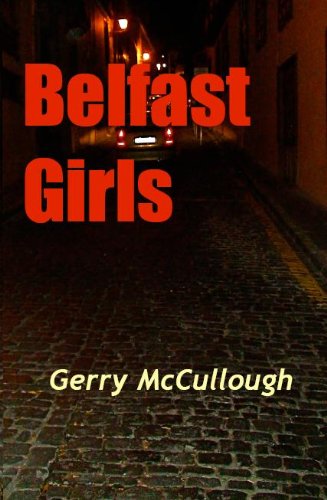
As Halloween approaches, I’m putting on the Irish.  It’s too long to wait until March.  On this post, I’ll be reviewing Gerald Hansen’s Embarrassment of Riches and Gerry McCullough’s Belfast Girls, both already successful on Amazon.   

In the Midwest when I was growing up, our agricultural region had indeed melted.  People might ask what nationality a name was and friends might disclose their ethnicity. But it was a little like racism today.  People were sensitive about ethnic backgrounds and histories.  Most  people identified with being a 20th century American. Yet if an Irish person was around, there was more openness about ethnicity.  Maybe it was the red hair or the O’ or Mc in front of a name.  It seemed lucky to be Irish .  Or that the Irish had pluck.  In every 10 Americans, one is likely to have Irish heritage.  Irish is the second most prevalent ethnicity in America, German being the most prevalent.

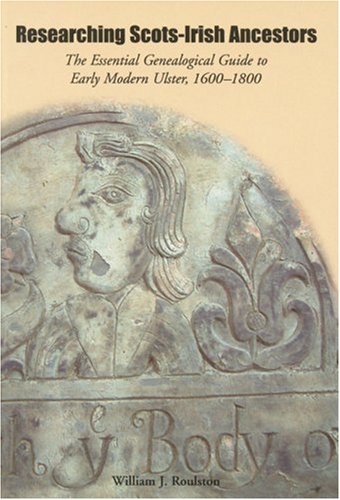
I wanted to say I was Irish too. I was more Welsh since my grandmother was first generation Welsh in America.  My father’s Holmes ancestor came from Coleraine, Ireland to New York in 1765.  That’s straining the Irish blood after so many generations.  My father said that any genealogical records were probably destroyed in the 1920s.  This summer, I found a book for genealogies in that period,  Researching Scots-Irish Ancestors: The Essential Genealogical Guide to Early Modern Ulster, 1600-1800: Ulster 1600-1800 by William J. Roulston.   Yes, there are records, church records and land estate records and Freemason records.  My great-great grandfather was a Freemason so maybe I could check on that if I wanted to know about my Irish heritage.

In college, I  wrote a paper on Juno and the Paycock by Sean O’Casey for my Irish Literature course.  I’ll never forget being introduced to Guinness beer.  My paper was about O’ Casey’s play being a tragi-comedy, a form that was a discussion point then.

Gerald Hansen’s  An Embarrassment of Riches  might be considered realism or a well-portrayed story about an Irish family.  To me, it exemplified that Irish talent for tragi-comedy.   I think Gerald was surprised when he hit the top 10 books for humor on Amazon.   It was certainly that, and more.  My review:

Gerald Hansen has written a whole book. It's not often that a book catches with characters that seem almost novelties at first and with prose that delves into setting and situation.  That he maintains the hilarity while weaving an undercurrent of contemporary temptation and its outcomes, is nothing short of a feat.

The impetuousness of the Flood family surges with the pathos of a raucous younger generation and an older generation's obsessions with gain. Ursula's attempts to revive love from her relatives with her lottery win are orchestrated with their responses:  Siofra's confirmation dress, her brother's street drugs and police informing, Dymphna's schemes for her child to have a Catholic father.  And Ursula's husband Jed.  What has he done with the lottery money?


This is a book you decide to finish early on and, surprisingly, the laughs and the amazement come more frequently in the latter third of it. I found myself waiting for certain members of the Flood family to appear again because, while there's hostility in this, you've come to care about some of them.


Belfast Girls by Gerry McCullough is both heartfelt and ominous.  It’s a winning book for a wide audience of readers, and although the turmoil in it keeps one reading, its ending is realistic and satisfying.  My review: